
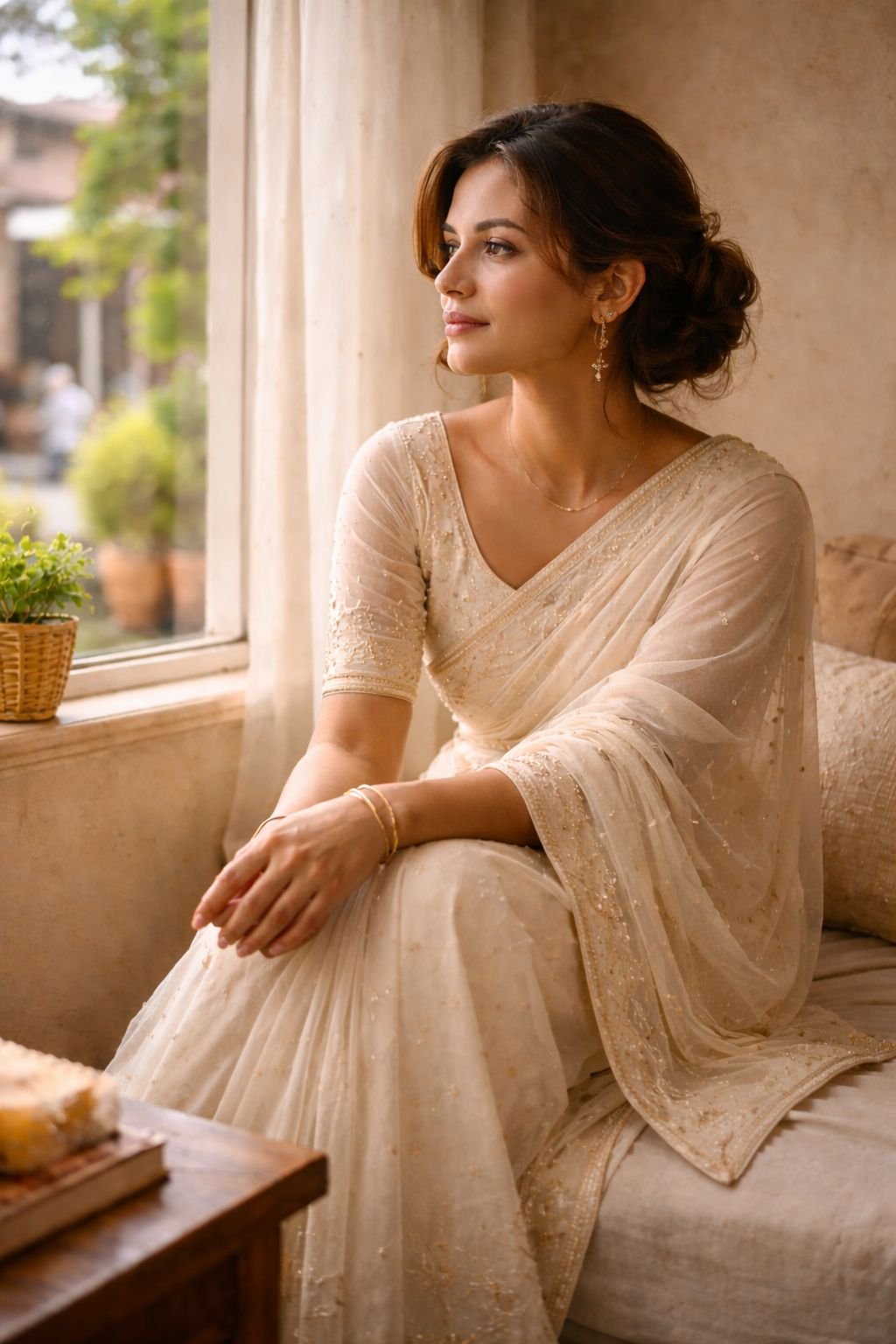
When you think of marriage, the first and the often spoken thing is celebration or a union or a fresh chapter. But what’s less discussed is the most important thing. It is the quiet emotional baggage and the shift a bride that she carries with herself . When all the rituals are over and the room finally empties, everything changes for her in just one go. One day becomes a dividing line between who she was and who she is expected to be. Life does not just move forward but it turns around completely.
For a woman, marriage is not only about gaining a partner but also about learning to live between memories and new responsibilities. The home she grew up in still exists and yet it no longer belongs to her in the same way. Familiar rooms turn into places she visits instead of returning to. This transition seems very subtle but is so heavy for that woman who goes through it. It is not sadness, exactly but a gentle ache of adjustment that is lived by labelling it as a part of life.
Her priorities begin to rearrange themselves almost overnight. Small decisions are no longer hers alone. Everyday habits from waking up to eating slowly align with another rhythm and there is no going back from this. There is love in this shift but there is also learning. Learning how to belong somewhere new without losing yourself entirely and learning how to care deeply while still holding onto personal dreams.
A bride often carries emotional baggage that does not come from fear but from responsibility. She thinks about expectations that she has not even been told yet. A good family never imposes any harsh responsibilities but still she constantly wonders if she will be good enough in roles that she has just stepped into. There is excitement but it exists alongside awareness. Awareness that she is now a bridge between two families and two ways of living two versions of herself.
What goes on in her mind is rarely dramatic. It is a quiet reflection of thoughts and about how to balance patience and growth. She hopes to be loved not just as a wife but as a person because her individuality should not fade into labels. At the same time, she wants to build something meaningful, something shared. These thoughts coexist without canceling each other out.
The beauty of this transition lies in resilience. A woman does not lose herself after marriage; she expands. She learns new forms of strength, new ways to communicate and new definitions of home. Over time, unfamiliar spaces begin to feel safe and what once felt overwhelming slowly becomes routine and routine turns into comfort.
Marriage does not erase her past. It adds layers to her present. The emotional weight she carries is not a burden but a sign of how deeply she feels, how seriously she steps into change. With support, understanding and time, this shift becomes less about sacrifice and more about evolution.
Life after marriage is not about starting over. It is about continuing with more love, more responsibility and a deeper understanding of self. And in that quiet transformation, a woman does not disappear. She grows into someone stronger, softer and more aware than before.