
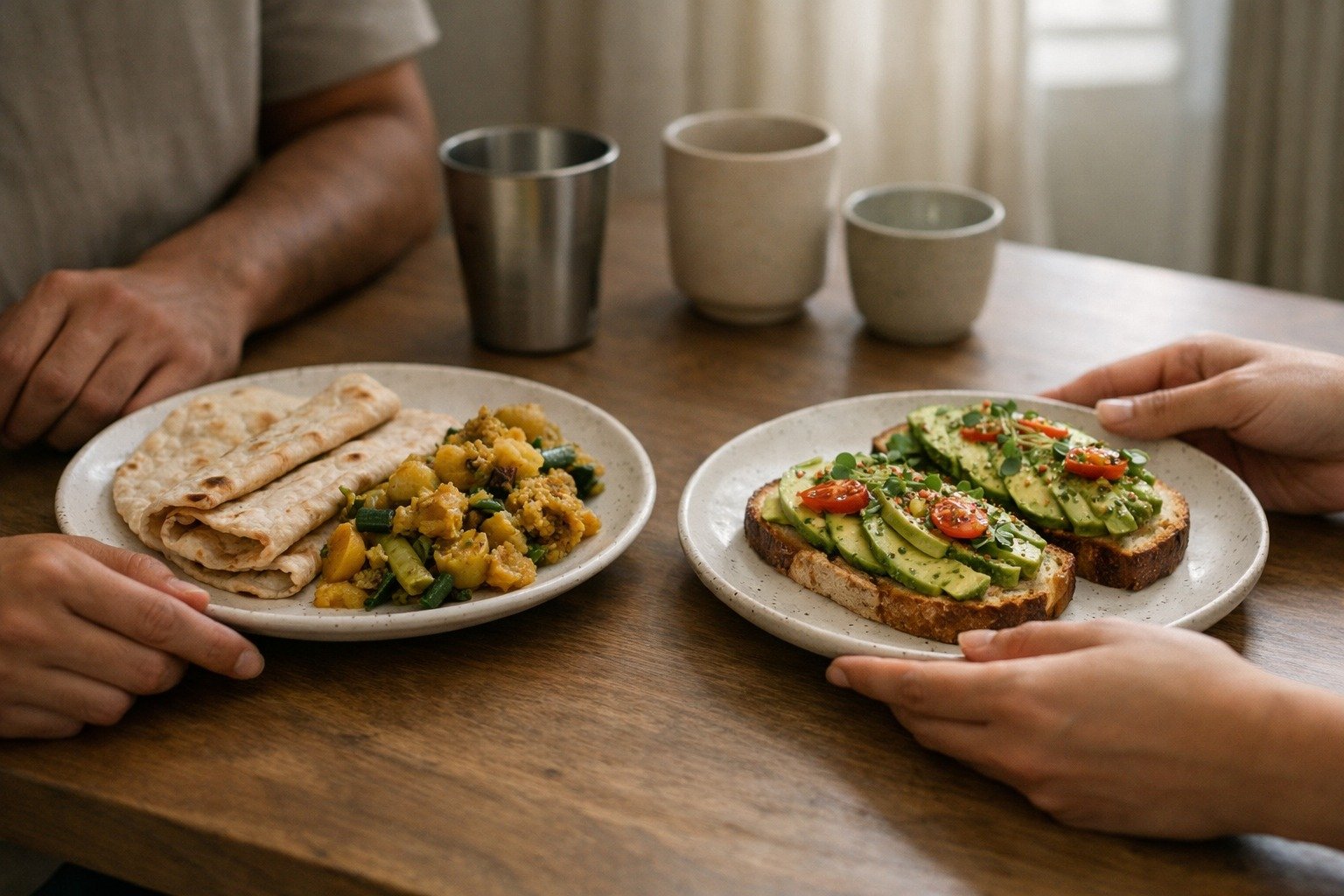
Walk into any cafe today and the menu feels oddly familiar, no matter which city you are in. Avocado toast, smoothie bowls, croissants, iced lattes with oat milk. Somewhere between Instagram trends and global pop culture our plates have quietly changed. Western food habits have slipped into our everyday lives so smoothly that we rarely pause to question them.
Food was once deeply tied to geography, climate and routine. What people ate made sense for the region they lived in. But now food choices are aligned by what looks aesthetic on a screen or what sounds “healthy” because the internet says so. A bowl of poha or paratha that kept generations nourished suddenly feels ordinary while avocado toast feels aspirational. Not because it is better but because it has been branded that way.
The influence shows most clearly in how food is perceived rather than what is eaten. Traditional meals are labelled heavy or outdated, while Western alternatives are seen as lighter and more balanced. This shift rarely considers context. Like who knew avocados 3 years before, they are flown across continents, priced high and praised endlessly while locally grown fruits and grains wait quietly on the sidelines. The idea of health has slowly moved away from balance and moved closer to trends.
A simple example sits right at the breakfast table. Imagine someone swapping a homemade vegetable-stuffed paratha for cereal or toast, believing they are making a clean choice. What often goes unnoticed is that the paratha carried fibre, seasonal vegetables and familiarity, while the replacement might be processed and less filling.
Western culture has also changed how food is consumed. Meals are no longer slow or shared as often. Eating has become rushed, multitasked and sometimes guilt-driven. Calories are counted more than satisfaction. The joy of eating what feels comforting has been replaced by the pressure to eat what feels acceptable.
This does not mean Western food deserves rejection. Exposure to global cuisines is a privilege and experimenting with flavours can be exciting. Problems arise when imitation replaces intuition. Food loses meaning when choice is driven only by trends and not by what the body actually responds to.
Borrow ideas, not habits. Enjoy a sourdough if you truly love it but do not abandon local meals that have quietly supported well-being for decades. Balance comes from understanding your own culture rather than copying from other's plate.
The next time a menu tempts you or a reel influences your craving, pause for a second. Ask whether the choice feels nourishing or just fashionable. Food should feel good long after the picture is taken.